
- Always ≥ 99% purity
- Manufactured and sealed in a sterile environment
- Lyophilised single-use vial, net peptide content stated on the certificate
- Each batch is independently double-tested

Bacteriostatic Water (0.9% benzyl alcohol) | 10 ml vial
$11.00
Works better together
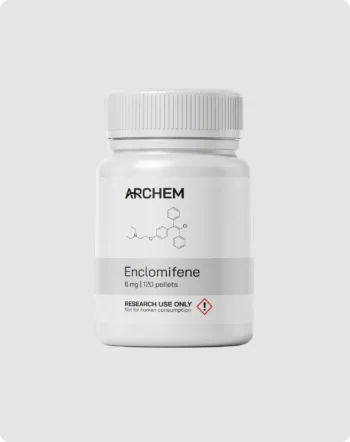
For laboratory research use only.
Bacteriostatic water is water with 0.9% benzyl alcohol, and the benzyl alcohol is the reason it exists and the reason it carries a warning. The preservative lets a multi-dose vial be punctured repeatedly without growing bacteria; it is also the agent that caused the “gasping syndrome” — metabolic acidosis, respiratory depression and death — in premature neonates given benzyl-alcohol-preserved flush solutions in the early 1980s (Gershanik et al., 1982, NEJM). In mice the acute toxicity is due to the alcohol itself, not its metabolite benzaldehyde, with an LD₅₀ near 1 g/kg (McCloskey et al., 1986, Journal of Pharmaceutical Sciences).
A diluent is only useful if it is sterile and its preservative is at the stated concentration. Every batch is sterility- and endotoxin-tested and assayed for benzyl alcohol content.
Specifications
| Compound name | Bacteriostatic water: purified water with 0.9% w/v benzyl alcohol |
| Compound class | Laboratory reconstitution diluent; sterile, non-pyrogenic water preserved with benzyl alcohol (not a peptide) |
| Amino-acid sequence | Not applicable |
| CAS number | 100-51-6 (benzyl alcohol) |
| Molecular formula | C7H8O (benzyl alcohol) in H₂O |
| Molecular weight | 108.1 g/mol (benzyl alcohol) |
| PubChem CID | 244 |
| Purity | Sterility and endotoxin per batch; benzyl alcohol content 0.9% w/v by assay |
| Origin | To be confirmed before publication |
| Presentation | Sterile solution · 10 ml multi-dose vial |
About the compound
The product is purified water containing 0.9% w/v benzyl alcohol as a bacteriostatic preservative, sterile-filtered, filled into 10 ml multi-dose vials and terminally sterilised. Benzyl alcohol at this concentration inhibits bacterial growth in a vial that will be entered more than once; sterile water for injection without preservative is single-use.
It is supplied for reconstituting lyophilised peptides for laboratory use: solubility testing, analytical sample preparation, in-vitro assays. Benzyl alcohol can affect the stability of some peptides and interfere with some assays, and for those cases a preservative-free diluent is the correct choice.
The neonatal hazard is the reason the preservative is never used in products for premature infants: the 1982 reports linked benzyl-alcohol-preserved solutions to a syndrome of gasping respirations, metabolic acidosis and death in low-birth-weight infants (Gershanik et al., 1982). This product is not a medicine and is not for administration to humans or animals.
What the published research shows
The gasping syndrome. Report of neurological deterioration, gasping respirations, metabolic acidosis and death in premature neonates receiving benzyl-alcohol-preserved intravascular flush solutions (Gershanik et al., 1982, NEJM).
Toxicity in adult and neonatal mice. Intraperitoneal benzyl alcohol: minimal effects below 800 mg/kg over 4 hours; LD₅₀ 1,000 mg/kg in both age groups at 4 hours and 650 mg/kg at 7 days in adults; toxicity attributable to benzyl alcohol rather than benzaldehyde (McCloskey et al., 1986).
Quality and verification
Independent analysis on every batch, before it reaches you:
- Sterile-filtered and terminally sterilised, with sterility testing per batch
- Bacterial endotoxin tested per batch
- Benzyl alcohol content assayed at 0.9% w/v
- Multi-dose vial with a bromobutyl stopper; use within 28 days of first puncture
- Batch number and expiry on the label
The specific reason testing matters for a diluent: a non-sterile or under-preserved vial contaminates every peptide it touches, and a vial with the wrong benzyl alcohol concentration changes the stability of what is dissolved in it. Sterility, endotoxin and preservative assay are the three numbers on the certificate. Our approach: the role of HPLC in compound testing and our UK certificate of analysis.
Research applications
Supplied as a characterised reference material for in-vitro and laboratory research, including:
- Reconstitution of lyophilised peptides for in-vitro and analytical work
- Preparation of multi-day working solutions where a preserved diluent is acceptable
- Solubility and formulation screening
Storage and handling
Supplied lyophilised. Keep sealed vials at −20 °C for long-term storage or 2–8 °C for short-term storage, protected from light, and allow a vial to reach room temperature before opening so that condensation does not wet the powder. Reconstituted solutions are for laboratory use only, are kept at 2–8 °C and used within the period stated on the certificate. Store at room temperature, protected from light; discard 28 days after first puncture. Our 10-step storage guide and stability calculator cover UK research-setting practice, and laboratory PPE applies to any research chemical.
Frequently asked questions
What is bacteriostatic water?
Sterile water containing 0.9% benzyl alcohol as a preservative, supplied as a 10 ml multi-dose laboratory diluent for reconstituting lyophilised peptides.
How does it differ from sterile water for injection?
Sterile water for injection has no preservative and is single-use; bacteriostatic water can be entered repeatedly for up to 28 days because the benzyl alcohol inhibits bacterial growth.
Why the neonatal warning?
Benzyl alcohol caused the fatal gasping syndrome in premature infants given preserved flush solutions (Gershanik et al., 1982). This product is not for administration to humans or animals in any case.
Can benzyl alcohol affect a peptide?
It can alter the stability of some peptides and interfere with some assays; a preservative-free diluent is the alternative for those cases.
Is this a medicine?
No. It is a laboratory diluent and is not licensed, marketed or supplied for injection.
What purity do you supply?
>99% by RP-HPLC, with ESI mass-spectrometric identity confirmation, net peptide content on the certificate, two independent analytical rounds per batch and a certificate of analysis.
Research reading
- What is a peptide? — definition, classes and why it matters in research
- Are SARMs peptides? — the clear, science-based answer
- How to read a certificate of analysis — purity, identity and what the numbers mean
- Browse the research peptide range
- Browse the full research compound range
Important compliance information
This product is supplied strictly for laboratory and analytical research use only. It is not a medicine, not a dietary supplement, not a cosmetic ingredient, and not for human or veterinary use. Bacteriostatic water is supplied here as a laboratory reconstitution diluent. It is not a licensed medicine, is not for injection into humans or animals, and benzyl alcohol is contraindicated in neonatal medicine because of the gasping syndrome. It contains no substance on the 2026 WADA Prohibited List.
Max Muscle Labs does not provide dosing guidance, reconstitution protocols for administration, or any information implying human use. By purchasing, you confirm you are a qualified researcher or institution and will use this material in accordance with all applicable laws and research-conduct standards.
Sources
- Gershanik J et al. (1982). The gasping syndrome and benzyl alcohol poisoning. NEJM
- McCloskey SE et al. (1986). Toxicity of benzyl alcohol in adult and neonatal mice. Journal of Pharmaceutical Sciences
- PubChem — Bacteriostatic water (CID 244)
- World Anti-Doping Agency — Prohibited List 2026
| Batch number | Pending first batch |
|---|---|
| CAS Number | 100-51-6 (benzyl alcohol) |
| Concentration | 0.9% w/v benzyl alcohol |
| Delivery - UK | Next working day |
| Delivery - Worldwide | 5-7 working days + customs processing time (varies) |
| Half-life | Not applicable |
| Heavy metals | <10 ppm (Pb, Cd, As, Hg) |
| Identity | Confirmed by HPLC retention time and ESI mass spectrometry |
| Microbial | <100 CFU/g |
| Molar mass | 108.1 g/mol (benzyl alcohol) |
| Molecular formula | C7H8O (benzyl alcohol) in H₂O |
| Purity | Pending first batch COA |
| Quality release date | Pending first batch COA |
| Residual solvents | Within ICH Q3C limits |
| Stock levels | Pre-launch |
| Storage | Lyophilised: 24 months at -20°C, sealed |
No lab reports available yet.
Add a review
There are no reviews yet.