
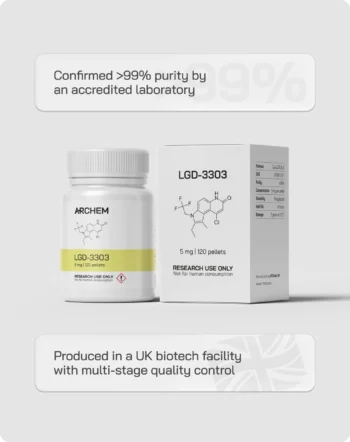
- Always ≥ 99% purity
- Manufactured and sealed in a sterile environment
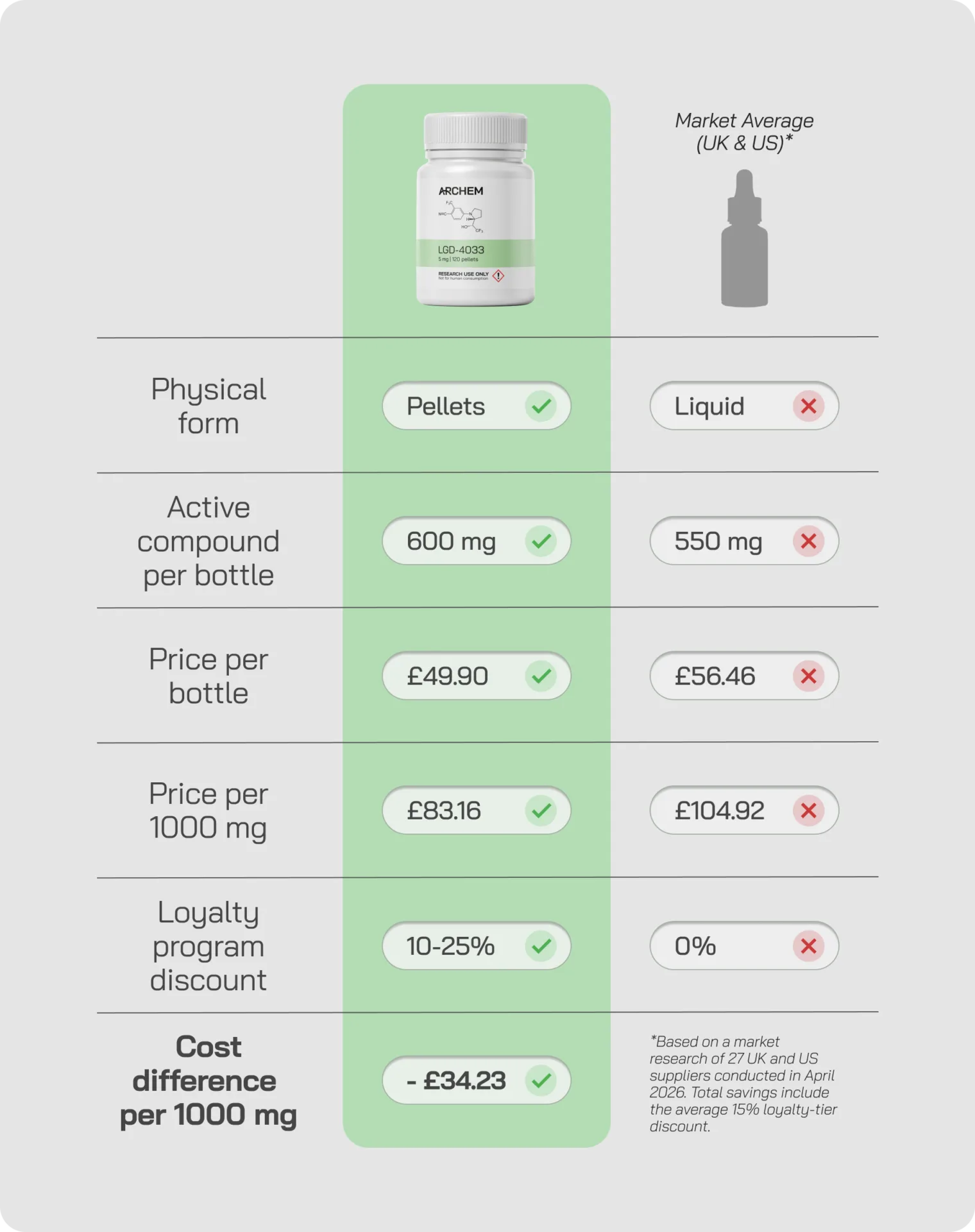
- Up to 70% more value in each bottle
- Each batch is independently double-tested
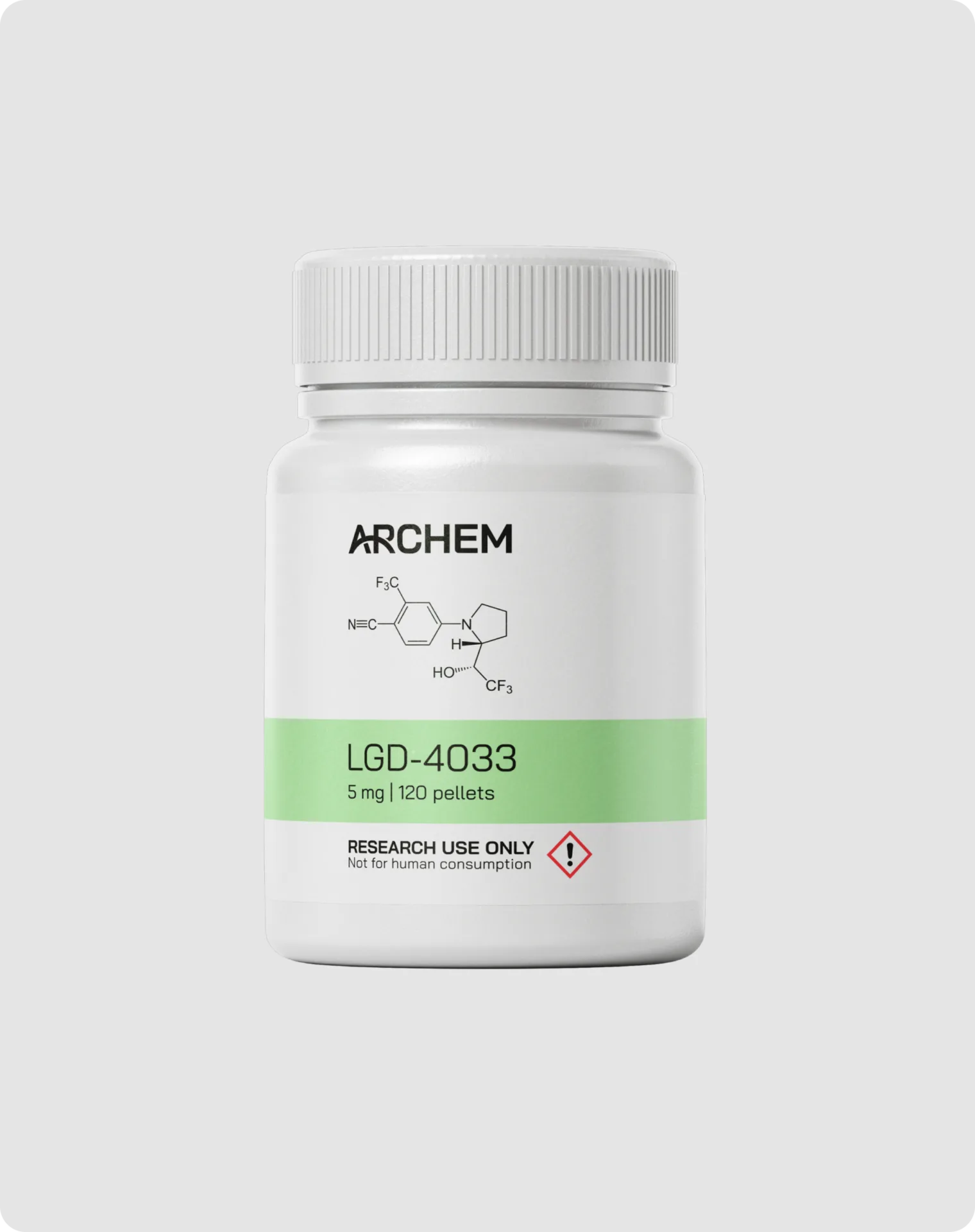
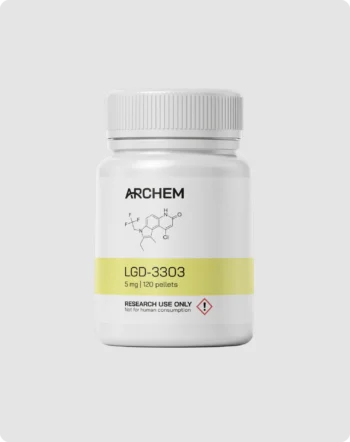
LGD-4033 (Ligandrol) | 120 x 5 mg
$67.00
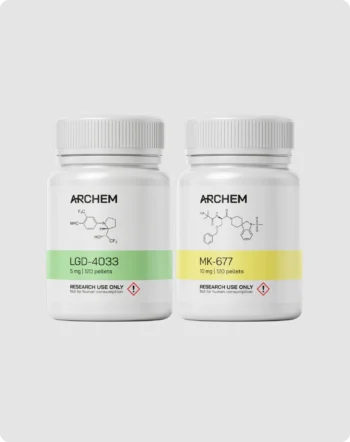
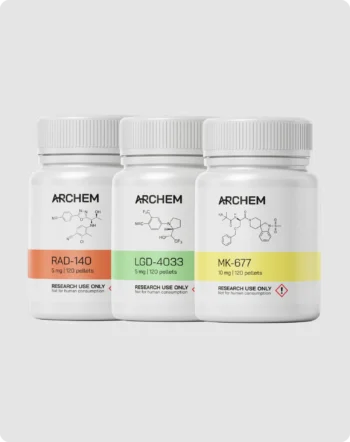
Recommended bundle
Save $14
Save $27
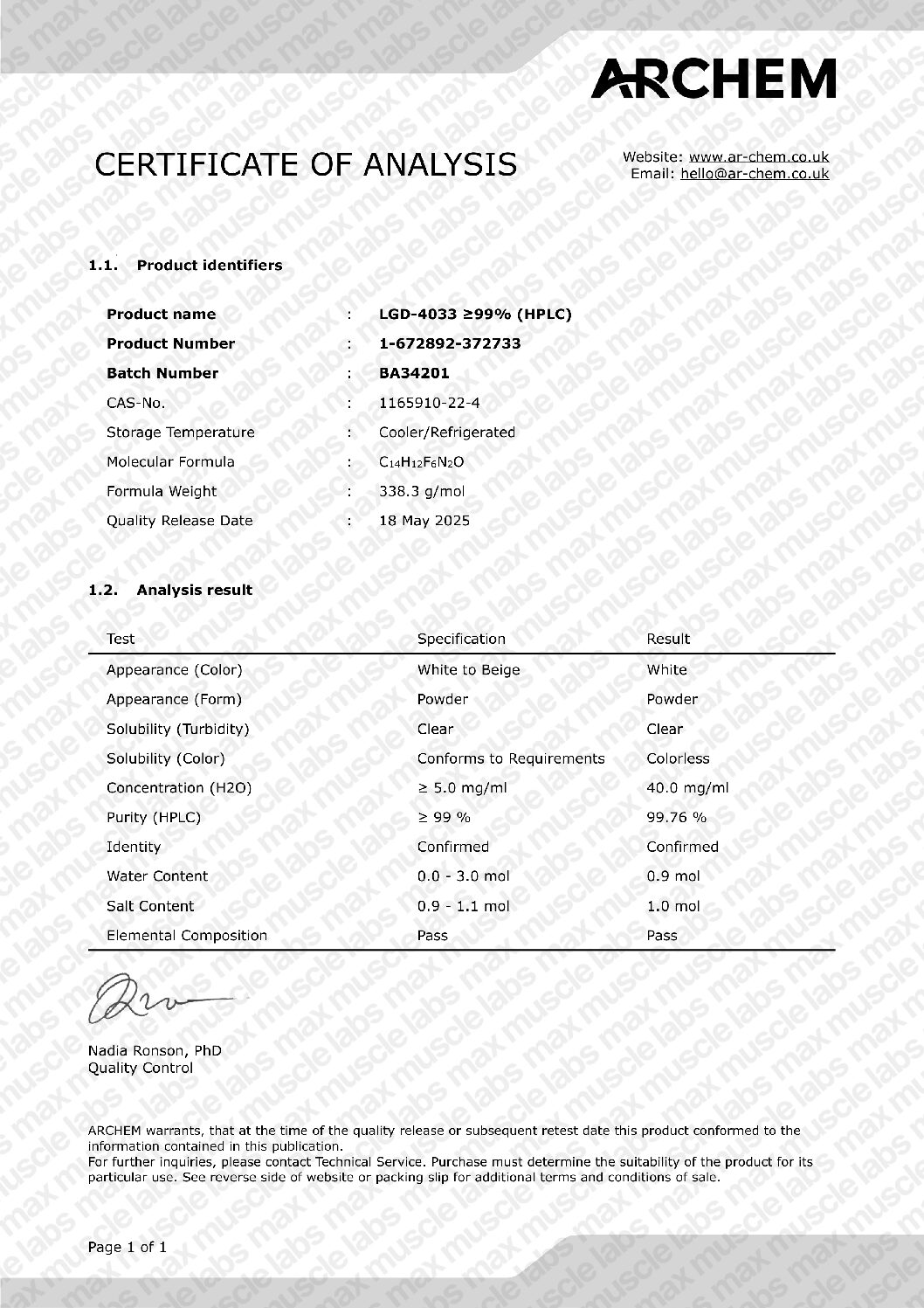
LGD-4033 COA BA34201
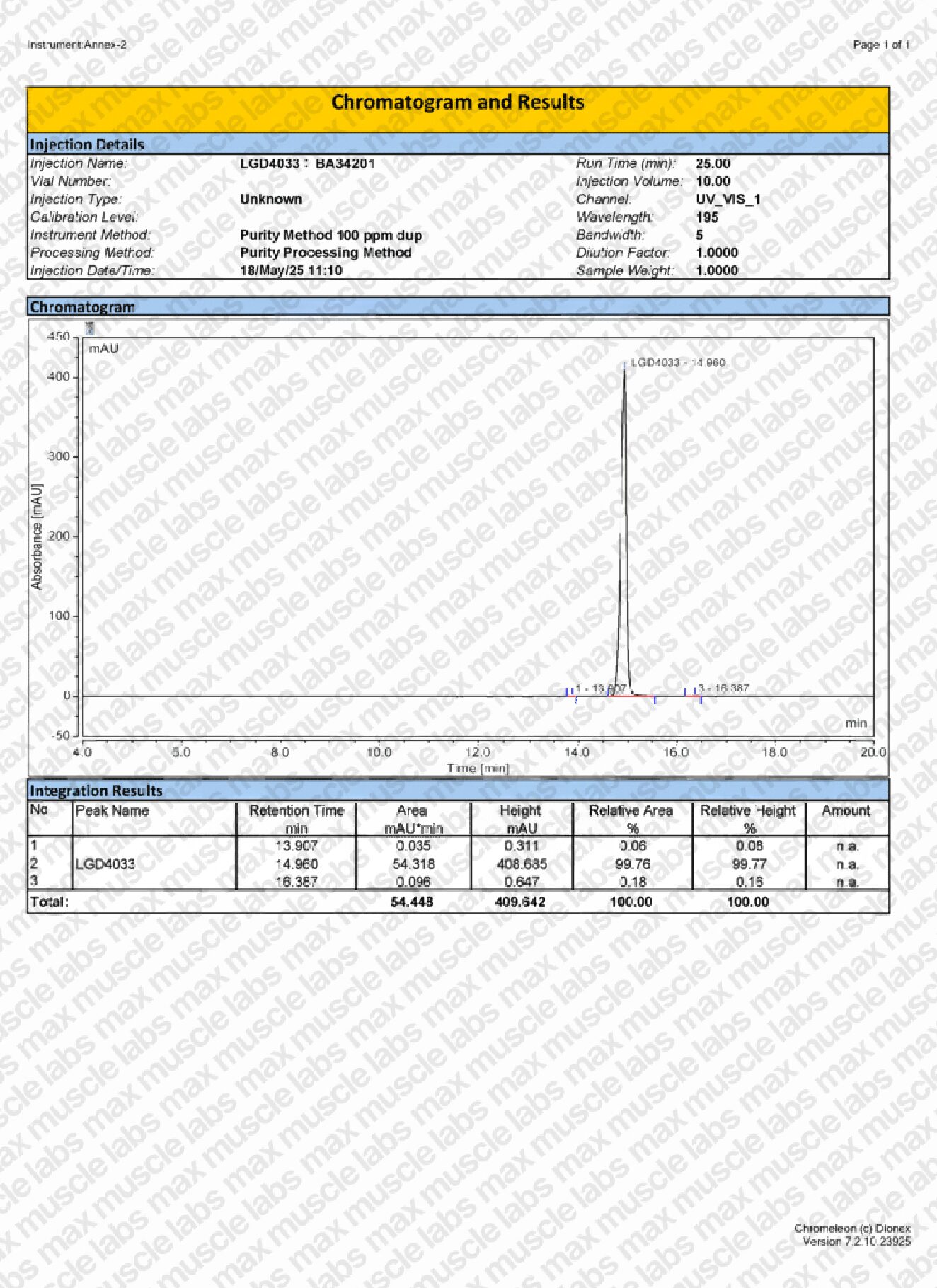
LGD-4033 HPLC BA34201
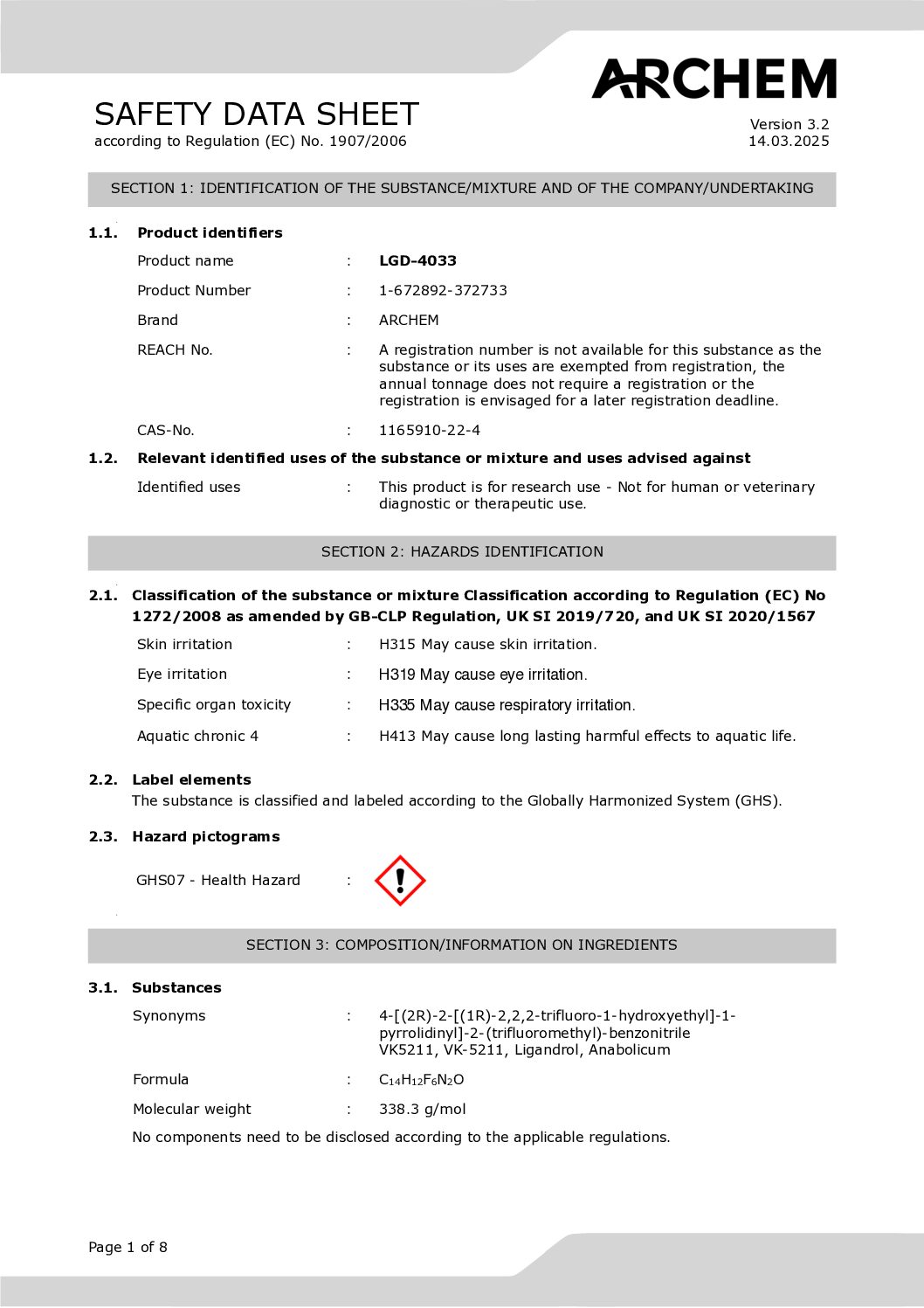
LGD-4033 SDS
LGD-4033 (Ligandrol) is a synthetic, non-steroidal Selective Androgen Receptor Modulator (SARM) under investigation for its high affinity and selectivity toward androgen receptors in skeletal muscle and bone tissue. It binds selectively to androgen receptors in skeletal muscle and bone tissue, with minimal interaction in non-target organs. Ligandrol has undergone Phase I clinical trials, where it demonstrated a favorable safety profile and dose-dependent increases in lean body mass, making it one of the most rigorously studied SARMs to date.
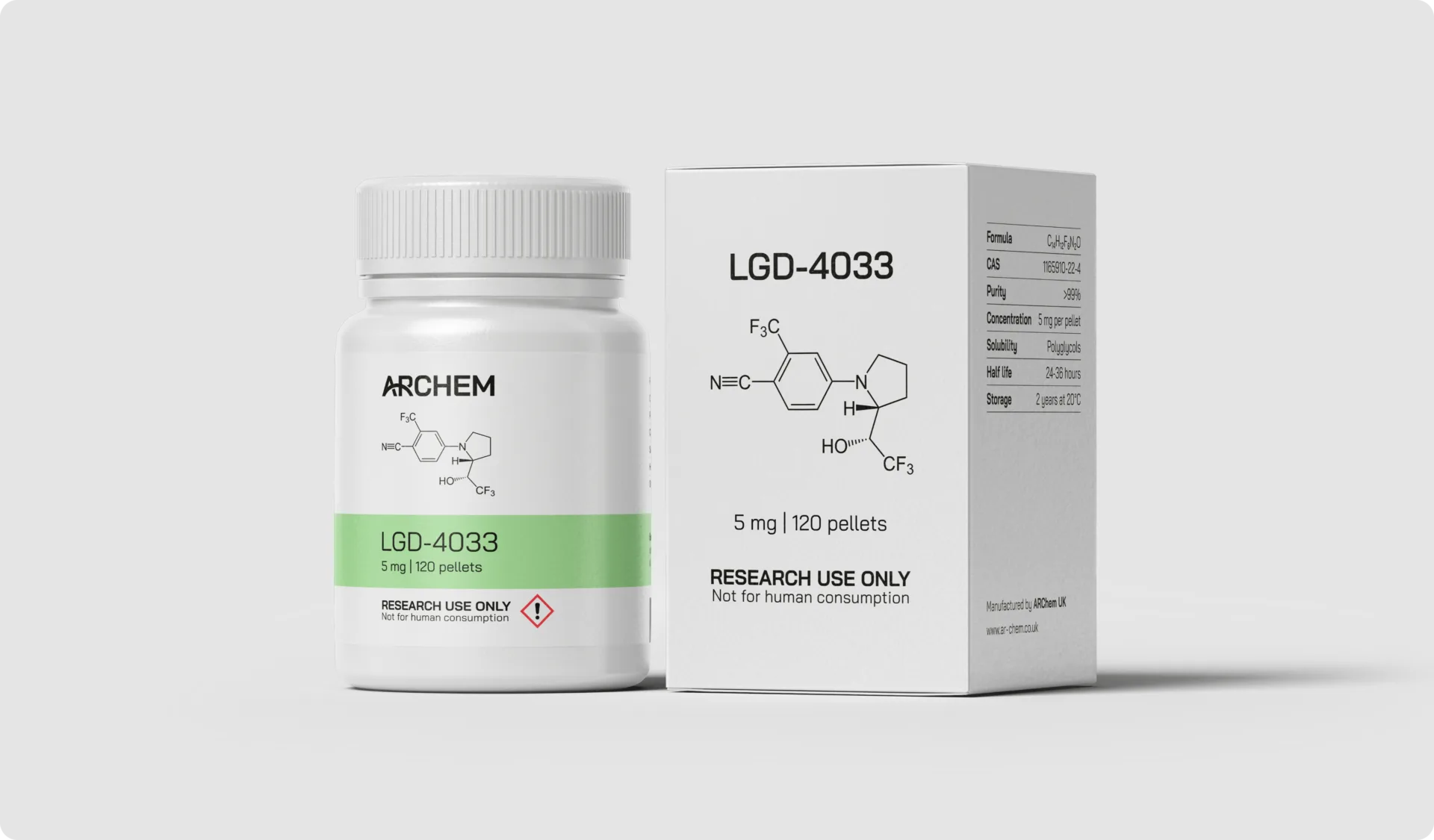
Strictly for laboratory research use only. Not for human consumption.
LGD-4033 is one of the most extensively studied SARMs in the published literature — and one of the most potent by weight, producing measurable effects in human trials at doses under 1 mg. That potency is exactly why compound purity matters: at sub-milligram activity, an inaccurately labelled product isn’t a minor variance, it’s a different experiment.
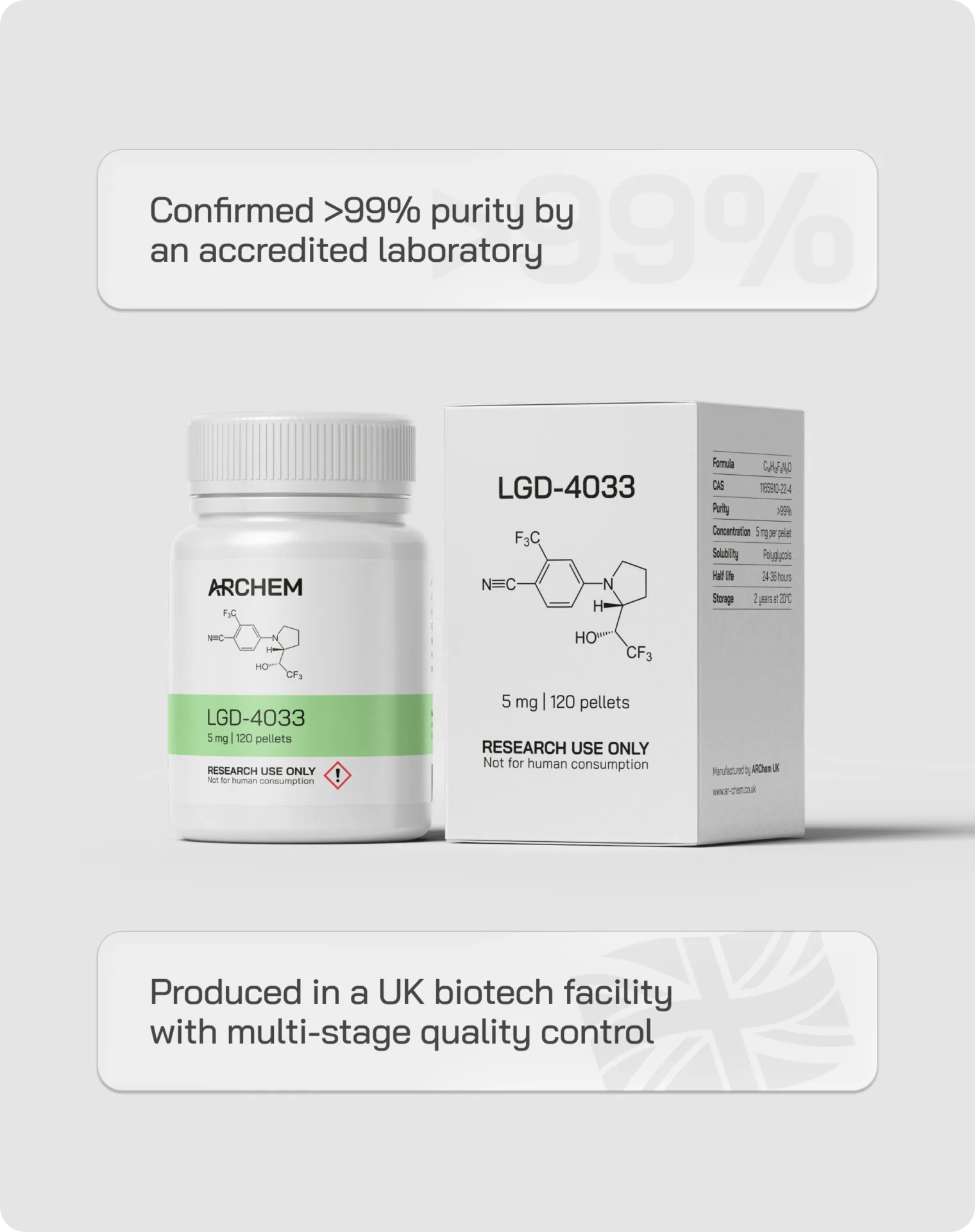
Every batch supplied by Max Muscle Labs is manufactured in the UK and verified to >99% purity by HPLC, with independent analysis before release. Your data starts from a characterised standard, not an assumption.
Specifications
| Compound name | LGD-4033 (Ligandrol, VK5211, Anabolicum) |
| Compound class | Selective androgen receptor modulator (SARM) |
| CAS number | 1165910-22-4 |
| Molecular formula | C14H12F6N2O |
| Molecular weight | 338.25 g/mol |
| PubChem CID | 44137686 |
| Purity | >99% (HPLC-verified) |
| Origin | Manufactured in the UK |
| Presentation | [Format] · [strength] · [quantity] |
About the compound
LGD-4033 is a non-steroidal, orally active selective androgen receptor modulator, originally discovered by Ligand Pharmaceuticals and later developed as VK5211 by Viking Therapeutics. It binds the androgen receptor with high affinity, acting as an agonist in muscle and bone tissue while showing weaker activity in tissues such as the prostate — the tissue selectivity that defines the SARM class.
What distinguishes LGD-4033 within that class is potency by weight. Where other SARMs are studied in the multi-milligram range, LGD-4033 produced dose-dependent effects in human trials at 0.1–1.0 mg daily — a meaningful difference when preparing solutions or calibrating an assay.
It is not an approved medicine in the UK, US, or elsewhere, and remains investigational after more than a decade of study.
What the published research shows
LGD-4033 has a more substantial human evidence base than most SARMs, which is part of why it’s a common reference compound.
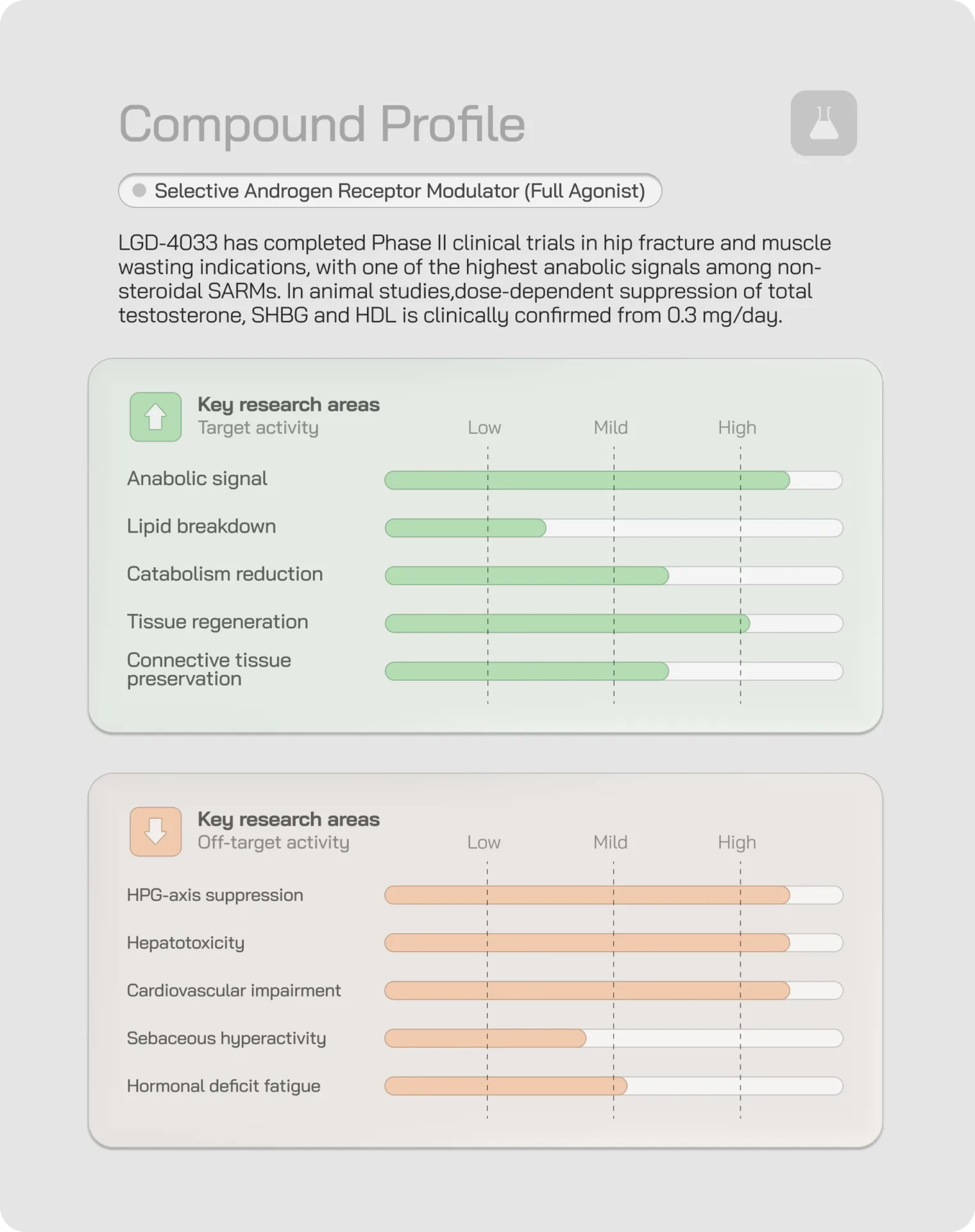
Phase 1, healthy young men. A randomised, double-blind, placebo-controlled trial in 76 healthy men studied daily doses of 0.1–1.0 mg over 21 days (Basaria et al., 2013). It produced dose-dependent increases in lean body mass, alongside dose-dependent suppression of total testosterone and sex hormone-binding globulin — both of which returned toward baseline after discontinuation.
Phase 2, hip-fracture recovery. Investigated as VK5211 in patients recovering from hip fracture, it produced placebo-adjusted increases in lean body mass over 12 weeks that scaled with dose.
The honest limitation: as with every SARM, these were short, low-dose, medically supervised studies. LGD-4033 has not completed the late-stage trials that would demonstrate improved function or establish long-term safety, and the case-report literature includes documented drug-induced liver injury associated with ligandrol. We publish this because accurate research context includes the safety signals, not just the effect sizes.
Quality and verification
Independent analysis on every batch, before it reaches you:
- >99% purity confirmed by HPLC (high-performance liquid chromatography)
- Identity and structure confirmed by mass spectrometry, with contaminant screening
- Two independent rounds of analysis per batch
- UK manufacture to pharmaceutical-grade laboratory standards
- Certificate of Analysis supplied — see how to read a SARM certificate of analysis
This isn’t a marketing line. Published analyses of products sold as SARMs have repeatedly found that a large proportion don’t contain what the label claims — some contain a different unapproved compound entirely. Verification is the difference between reproducible research and an unknown variable. More on our methodology: the role of HPLC in SARMs testing and our UK SARMs certificate of analysis.
Research applications
Supplied as a characterised reference material for in-vitro and laboratory research, including:
- Androgen receptor binding and selectivity studies
- Musculoskeletal and body-composition research models
- Comparative SARM pharmacology (potency, receptor affinity)
- Analytical method development, assay calibration and reference standardisation
- Anti-doping detection method development
Storage and handling
Store in a cool, dry environment away from direct light. Lyophilised and solution formats have different stability profiles — our 10-step guide to storing SARMs safely covers handling in a UK research setting, and appropriate laboratory PPE should be used when handling any research chemical.
Frequently asked questions
What is LGD-4033?
A non-steroidal selective androgen receptor modulator (SARM), also known as ligandrol or VK5211, supplied here as a research-grade reference compound.
How does LGD-4033 differ from ostarine?
Primarily potency and clinical maturity. LGD-4033 is more potent by weight (active at sub-milligram doses); ostarine progressed further through clinical trials. Both act on the androgen receptor and share similar categories of documented effect — see our Ostarine (MK-2866) research page.
Is LGD-4033 legal in the UK?
It is not licensed for human use and must not be marketed or sold for human consumption. It may be supplied for legitimate laboratory research. Full detail: are SARMs legal to buy in the UK for research purposes?
Is it detectable in anti-doping testing?
Yes. LGD-4033 is on the WADA prohibited list and is detectable in standard screening — see can SARMs be detected in drug tests?
What purity do you supply?
>99%, HPLC-verified, with a certificate of analysis and two independent rounds of testing per batch.
Research reading
- SARMs UK guide — the complete research overview
- Do SARMs increase testosterone? — what the suppression data shows
- How do SARMs cause gyno? — the indirect mechanism, and why LGD-4033’s suppression matters
- Are SARMs hard on your liver? — a research-focused breakdown
- SARMs vs steroids — the pharmacological difference
- Browse the full research SARMs range
Important compliance information
This product is supplied strictly for laboratory and analytical research use only. It is not a medicine, not a dietary supplement, and not for human or veterinary consumption. LGD-4033 is not approved by the MHRA, FDA, or any regulator for human use, and is prohibited in sport by WADA.
Max Muscle Labs does not provide dosing guidance, usage protocols, or any information implying human use. By purchasing, you confirm you are a qualified researcher or institution and will use this material in accordance with all applicable laws and research-conduct standards.
Sources
| Batch number | BA34201 |
|---|---|
| CAS Number | 1165910-22-4 |
| Concentration | 5 mg |
| Delivery - UK | Next working day |
| Delivery - Worldwide | 5-7 working days + customs processing time (varies) |
| Half-life | ~24-36 hours |
| Heavy metals | <10 ppm (Pb, Cd, As, Hg) |
| Identity | Confirmed by retention time and mass spectrometry |
| Microbial | <100 CFU/g |
| Molar mass | 338.3 g/mol |
| Molecular formula | C14H12F6N2O |
| Purity | 99.76% |
| Quality release date | 18 May 2025 |
| Residual solvents | Within ICH Q3C limits |
| Stock levels | Low |
| Storage | 2 years at 20°C |
LGD-4033 COA BA34201
LGD-4033 HPLC BA34201
LGD-4033 SDS
Add a review

Raymond –
super fast delivery, and product is as expected. Seems to be working great
David –
Good research materials